
Understanding Load-Bearing Capacity in Asphalt Design
Not all pavements are created equal. A driveway doesn’t face the same stress as a freight terminal or airport runway. That’s why understanding load-bearing capacity is crucial in asphalt design.
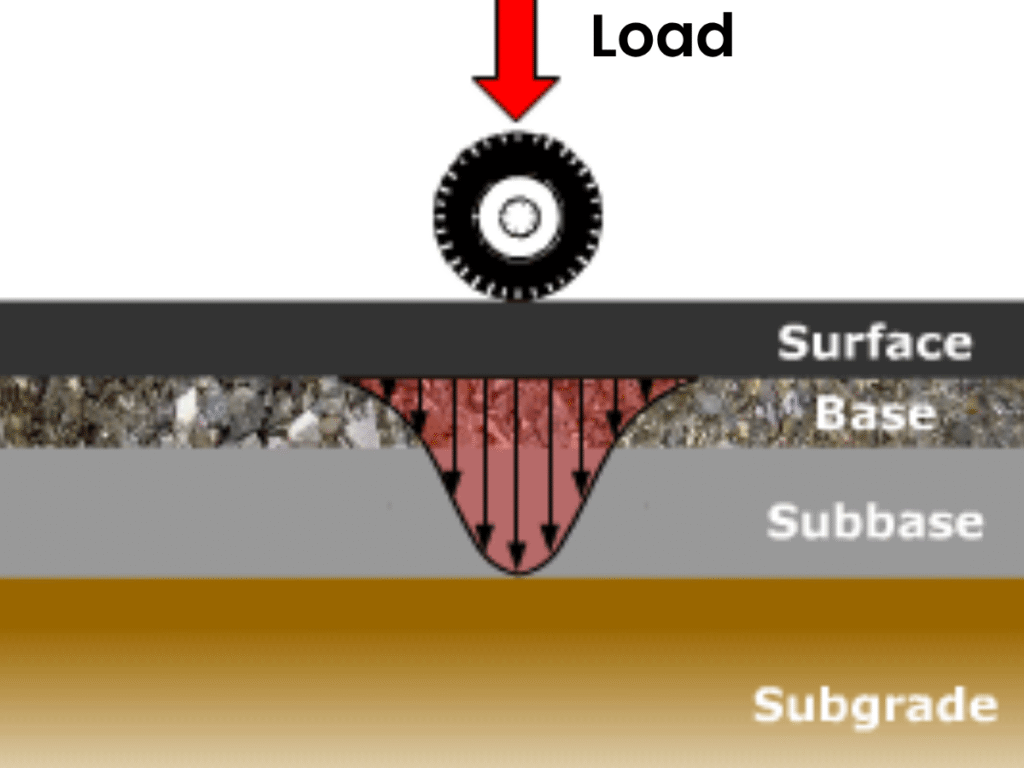
At its core, load-bearing capacity refers to how much weight the pavement can support without cracking, deforming, or failing. It’s not just about surface thickness—it’s a complex equation involving the subgrade, base, binder, and surface layers working together.
If any one layer is under-designed, the pavement will fail. For heavy-duty applications, engineers use thicker base layers, dense-graded asphalt, and sometimes even reinforcing grids to distribute pressure evenly. In lighter-use areas, a standard mix may suffice—but it still needs to be carefully calculated.
Factors like climate, traffic frequency, and vehicle type all influence the final design. Engineers often use ESALs (Equivalent Single Axle Loads) to estimate lifetime wear and plan accordingly.
Getting this right ensures the pavement can endure its intended load without premature cracking or rutting. Getting it wrong? That leads to expensive repairs and safety risks down the road.
Proper load design isn’t overkill—it’s how you protect your investment, your infrastructure, and the people who use it.