
The Science Behind Pavement Longevity and Durability
Why Some Roads Last Decades—And Others Crack in Months
Ever driven on a brand-new road only to see it start cracking within a year? Meanwhile, another stretch of pavement you’ve driven on for a decade still feels smooth and sturdy?
The difference lies not just in material—but in the science behind design, construction, and maintenance.
In 2025, understanding pavement longevity isn’t just an engineering problem—it’s a priority for city planners, property developers, and transportation agencies looking to maximize ROI and minimize disruptions.
Let’s explore the key factors that determine how long your asphalt pavement actually lasts.
What Is Pavement Longevity, Really?
Pavement longevity refers to the total life span of a road or surface—from the day it’s constructed to the day it needs to be fully reconstructed. Durability, on the other hand, refers to how well it resists cracking, rutting, water damage, and wear during that life span.
A truly long-lasting pavement doesn’t just survive—it performs well, requiring minimal intervention over time.
5 Core Scientific Principles Behind Long-Lasting Asphalt
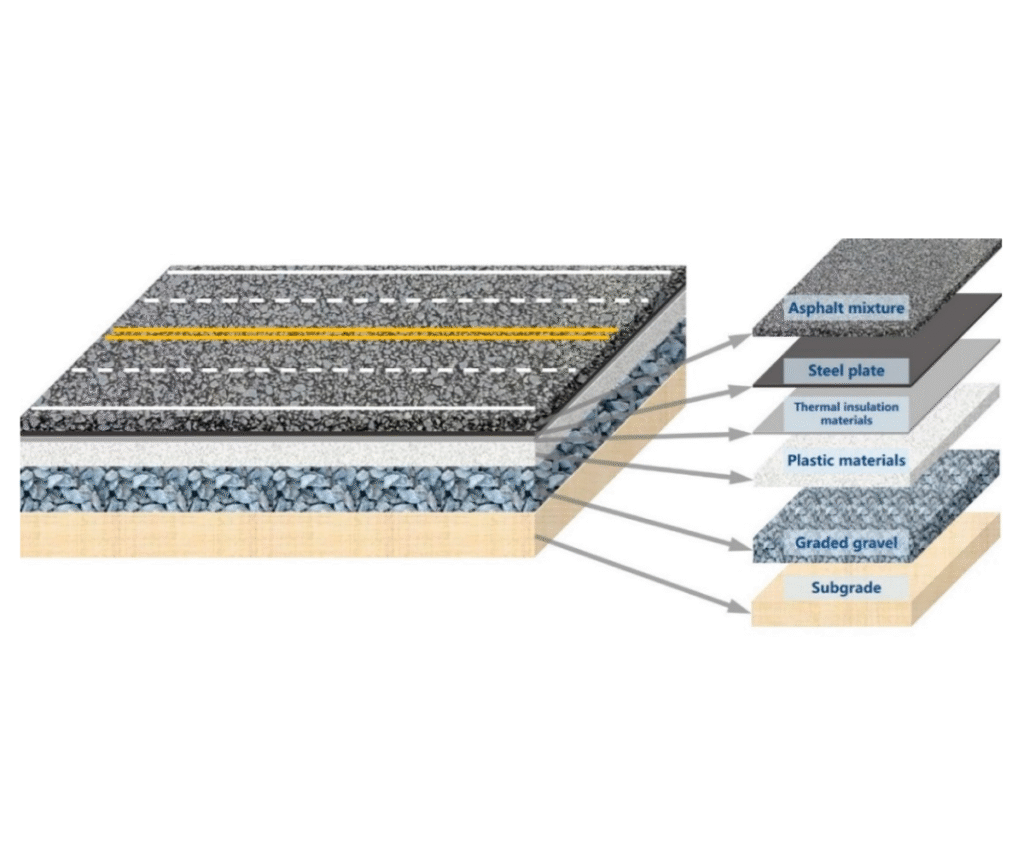
1. Structural Layering and Design
Durability begins below the surface. Proper layering ensures that stress is distributed evenly, and the pavement remains stable under traffic loads.
- Subgrade: The native soil must be compacted and stable.
- Base Course: A crushed stone layer provides strength and drainage.
- Binder Course: Binds the surface and base layers.
- Surface Course: The top layer—engineered for flexibility and resistance.
Engineers use load-bearing calculations and deflection tests to design a pavement structure that fits its intended use.
2. Material Quality and Mix Design
Not all asphalt is created equal. The asphalt binder (bitumen) and aggregate blend must be tailored to local conditions and traffic types.
In 2025, mix design includes:
- Polymer-modified binders for flexibility and weather resistance
- Higher RAP (Recycled Asphalt Pavement) content for sustainability
- Warm Mix Asphalt (WMA) for lower emissions and easier compaction
Even the size, shape, and mineral makeup of aggregates influence how well pavement resists rutting, cracking, and fatigue.
3. Climate Compatibility
A pavement designed for Arizona might fail in Minnesota.
- Cold climates need asphalt that can expand and contract without cracking.
- Hot climates require stiff binders that don’t soften under extreme heat.
- Rainy or coastal areas need superior drainage and water-resistant layers.
Pavement scientists use climate modeling to test and simulate material behavior before laying a single inch of asphalt.
4. Load and Traffic Forecasting
Durability also depends on who and what will be driving over the pavement—and how often.
Roads are engineered to accommodate specific ESALs (Equivalent Single Axle Loads). Underestimating this can cause premature failures.
For example:
- A residential street may be designed for light vehicles and occasional trucks.
- An industrial zone may need to withstand constant 18-wheeler traffic.
Getting this wrong means your road might last 5 years instead of 25.
5. Maintenance Strategy
Even the best-designed pavement won’t last long without regular upkeep.
Key practices include:
- Crack sealing (every 1–2 years)
- Sealcoating (every 3–5 years)
- Patching and pothole repair as needed
- Resurfacing (every 10–15 years)
Maintenance isn’t just cosmetic—it protects the integrity of the entire structure by preventing water infiltration and oxidation.
Modern Tech That Improves Pavement Durability
- Infrared thermography: Detects subsurface damage before it becomes visible
- GIS-based asset management: Tracks pavement condition over time
- Smart sensors: Monitor stress, moisture, and load in real time
- AI-powered prediction models: Help forecast failure zones and prioritize repairs
Cities and contractors using these technologies are seeing roads last 5–10 years longer than traditional builds.
Average Lifespan of Asphalt Surfaces
| Pavement Type | Expected Lifespan |
| Residential Driveway | 20–25 years |
| Urban Roads | 15–20 years |
| Highways and Freeways | 12–18 years |
| Industrial Pavement | 10–15 years |
| Bike/Walking Trails | 20+ years |
Note: These numbers assume routine maintenance is performed.
Final Take: Longevity Is Engineered, Not Estimated
Long-lasting pavements don’t happen by chance. They’re built with the right materials, mix designs, climate data, and ongoing care.
Whether you’re managing a city’s infrastructure or overseeing a commercial build, investing in smarter design and science-backed strategies will pay off in smoother roads, fewer repairs, and longer service life.