
The Impact of Weather on Asphalt Pavement Performance
Weather isn’t just a background factor—it’s one of the most aggressive forces acting on asphalt pavement. From extreme heat waves to freezing temperatures, changing weather conditions affect everything from surface smoothness to overall lifespan. Understanding how asphalt reacts to different climates can help homeowners, contractors, and city planners choose better materials, plan smarter projects, and maintain their pavement more effectively.
Let’s talk heat. In warmer regions, high temperatures can cause the asphalt binder to soften. This results in rutting—where wheel paths get permanently deformed. On especially hot days, you might even notice asphalt getting slightly sticky under heavy traffic, especially in intersections or parking lots. If this problem goes unchecked, those deformations evolve into cracks and ultimately potholes.
In cold climates, things flip. Asphalt becomes brittle when temperatures drop. Cracks form more easily, especially when the surface experiences rapid temperature swings. The infamous freeze-thaw cycle is brutal—water gets into tiny cracks, freezes, expands, and then breaks the pavement apart. Over a single winter, small cracks can transform into wide gaps or surface craters.
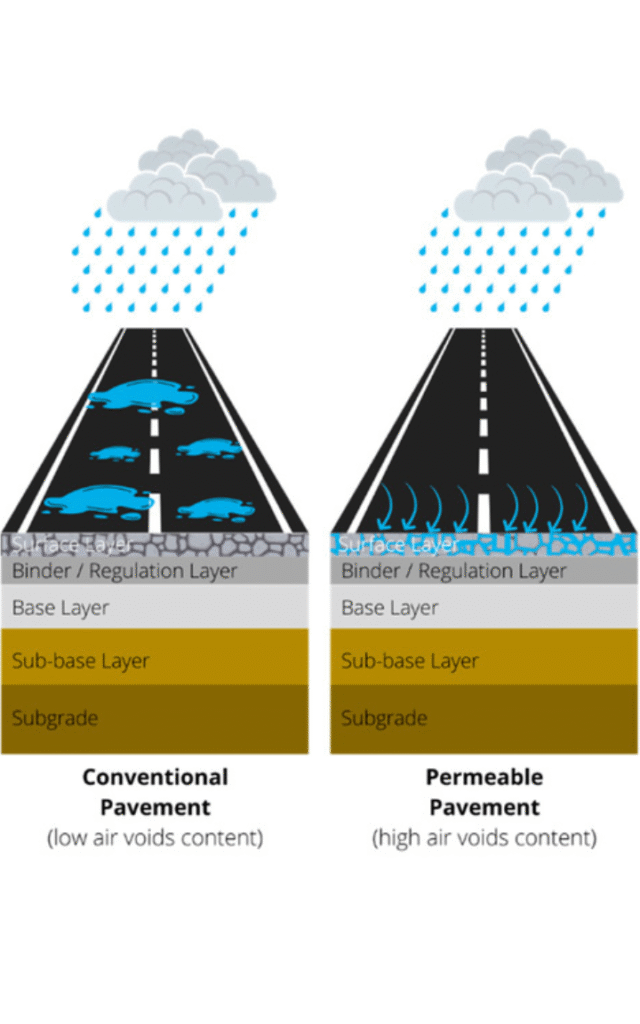
Rain doesn’t help either. Prolonged water exposure weakens the subbase and causes erosion beneath the asphalt. When water sits on the surface or doesn’t drain properly, it starts undermining structural stability. This is why grading and stormwater management are non-negotiable during the installation phase.
Even UV rays play a role. Constant sun exposure oxidizes the surface of asphalt, causing it to lose its natural oils. This makes it dry out and become more brittle over time. That signature black color fades to gray—a sign that your pavement is aging and needs attention.
So how do we fight back? First, choose the right mix. Engineers in 2025 have access to region-specific asphalt formulas. These include polymer-modified binders, air-void technology, and other additives that make pavement more resilient in hot, cold, or humid conditions.
Maintenance also matters. In hot regions, sealcoating every 2–3 years protects against UV degradation. In colder climates, pre-winter inspections help identify and seal cracks before water has a chance to freeze inside them. Good drainage and regular sweeping prevent clogging and water pooling.
Some cities are investing in climate-adaptive infrastructure. Smart sensors embedded into pavement monitor temperature shifts, moisture levels, and stress points. These tools allow real-time monitoring and early detection of vulnerabilities—making maintenance more proactive and less expensive in the long run.
Weather will always be a challenge, but it doesn’t have to be a death sentence for your pavement. By understanding how climate interacts with asphalt, and using the right materials and techniques, you can keep your roadways smooth and safe through all seasons.