
Preventing and Repairing Asphalt Potholes
Potholes don’t just wreck your suspension—they also reflect poor pavement management. Left untreated, they grow fast, damage vehicles, and pose liability risks. But the good news? Potholes are preventable, and repairable, with a little planning and smart action.
It all starts with a crack. Water gets in, freezes, expands, and begins to break the asphalt apart. As traffic rolls over these weak points, the damage multiplies. In areas with heavy rainfall or snow, potholes can develop in just a few months.
The key to prevention is maintenance. Crack sealing keeps water out of the surface. Sealcoating acts as a barrier against moisture and UV rays. Cleaning your surface regularly—removing leaves, debris, and sediment—ensures your drainage systems don’t get clogged, preventing water pooling.
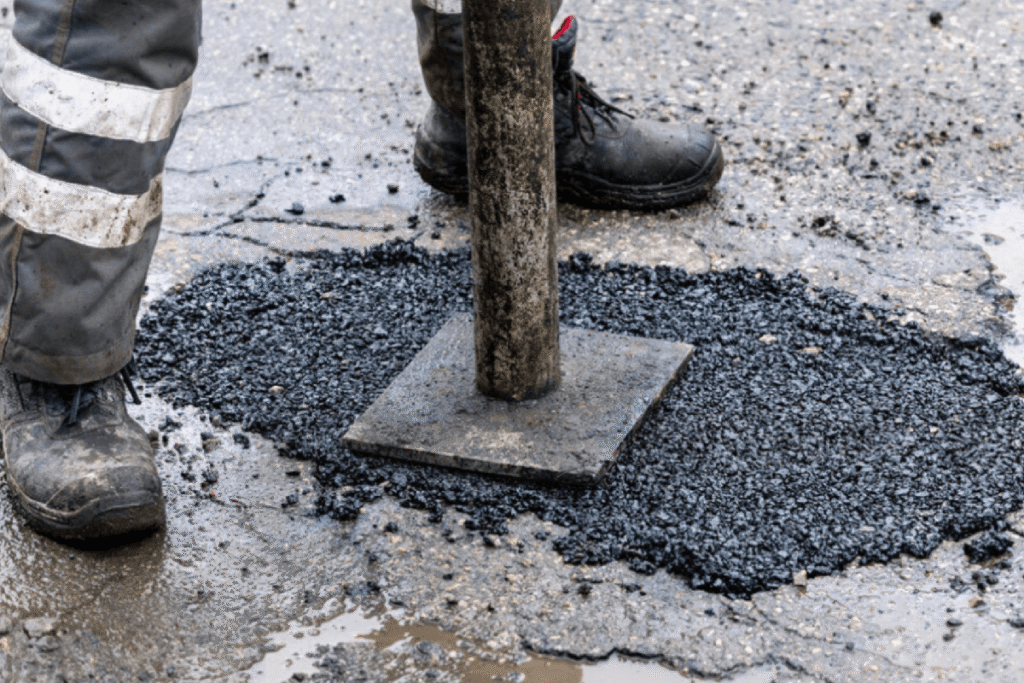
When potholes appear, the clock is ticking. Cold patch is a fast, temporary fix. It works in almost any weather, requires minimal equipment, and keeps things safe until a permanent repair can be scheduled.
For lasting results, hot mix asphalt is the gold standard. The area is cleaned, tacked, filled, and compacted—creating a seamless finish. Infrared patching is another modern method. It uses heat to blend old and new asphalt together, offering a smooth finish that’s nearly invisible.
For chronic pothole areas, full-depth patching might be needed. This involves cutting and removing damaged pavement and base layers, then rebuilding from the ground up.
Want to stay ahead of the game? Create a seasonal maintenance checklist. Inspect surfaces twice a year. After winter, look for damage from plowing or freezing. Before fall, seal cracks to prep for rain and cold.
Potholes are a pain—but with the right approach, they don’t have to be inevitable. Stay proactive, and your asphalt will stay strong, safe, and smooth.