
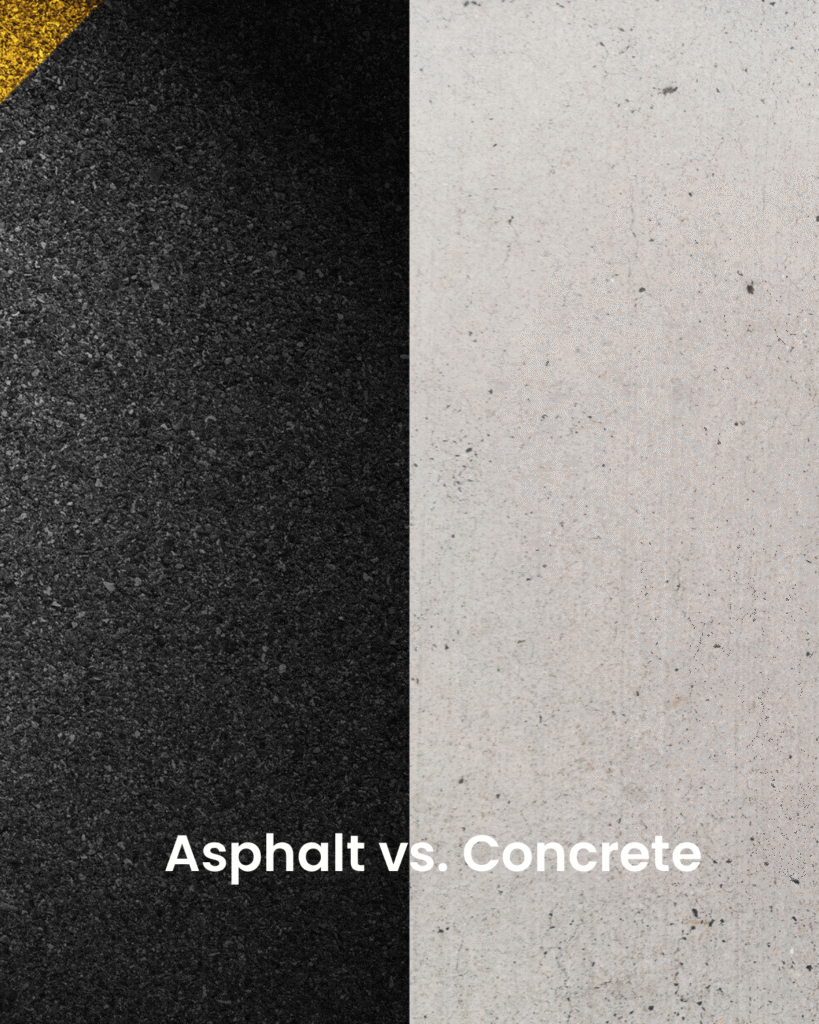
Comparing Asphalt vs. Concrete for Road Construction Projects
The Classic Debate in Modern Infrastructure
When it comes to road construction, the age-old question resurfaces: Asphalt or concrete? Both materials have unique strengths, loyal advocates, and important roles in shaping our infrastructure. But how do they really compare in 2025?
If you’re planning a roadway, parking lot, driveway, or airport runway, choosing the right material isn’t just about cost—it’s about performance, durability, sustainability, and long-term value.
Let’s break it down.
Composition and Construction Differences
| Feature | Asphalt | Concrete |
| Base Material | Bitumen + aggregates | Cement + aggregates + water |
| Installation Time | Quick (days) | Slower (weeks) |
| Surface Flexibility | Flexible and absorbs stress | Rigid and stiff |
| Curing Time | Usable in 24–48 hours | Requires 7+ days to cure |
Asphalt is often chosen for its speed of installation and flexibility under traffic stress. Concrete offers greater structural strength but takes longer to install and cure.
Cost Comparison: Upfront and Over Time
Initial Costs
Asphalt is significantly cheaper to install upfront. In 2025, the average cost per square foot for a standard asphalt road ranges from $3 to $5, while concrete ranges from $5 to $10.
Maintenance and Lifespan
Concrete can last up to 30–40 years with minimal maintenance. Asphalt typically lasts 15–25 years but requires regular sealing, patching, and resurfacing.
Long-Term Cost Efficiency
Over a 30-year lifecycle, concrete may cost less due to fewer major repairs, but asphalt remains the more flexible, budget-friendly option for projects with tighter funding.
Performance in Different Environments
Climate Considerations
- Asphalt: Performs better in colder climates due to its flexibility and ability to handle freeze-thaw cycles. However, it can soften in extreme heat.
- Concrete: Excels in hot, sunny climates but is prone to cracking in cold regions without proper joints and reinforcement.
Traffic Load
- Heavy trucks or industrial zones? Concrete often wins.
- High-speed roads, highways, or urban streets? Asphalt performs better under repeated expansion and contraction.
Maintenance Needs and Repairability
| Category | Asphalt | Concrete |
| Crack Sealing | Easy and inexpensive | More complex and costly |
| Patching | Fast with cold/hot mix | Time-consuming; may require slabs |
| Resurfacing | Straightforward (overlay) | Not applicable (requires re-pour) |
| Aesthetics | Dark finish, hides oil stains | Lighter, shows stains |
One of asphalt’s greatest strengths lies in its ease of repair and resurfacing—a major win for municipalities and property managers who can’t afford lengthy lane closures.
Environmental Considerations in 2025
Recyclability
- Asphalt is 100% recyclable. In fact, it’s the most recycled material in the U.S. today.
- Concrete is recyclable too, but less frequently reused in road applications.
Eco-Friendly Options
- Warm Mix Asphalt (WMA) cuts emissions and fuel consumption.
- Concrete production emits more CO₂ due to the energy-intensive cement industry, but carbon-capture technologies are helping offset this.
Use Cases: Which Material Wins?
| Application | Preferred Material | Why |
| Residential Driveways | Asphalt | Affordable, smooth, easy to repair |
| Urban Roads & Highways | Asphalt | Fast install, adaptable to stress |
| Airport Runways | Asphalt | Flexible under impact, easy to resurface |
| Industrial Loading Zones | Concrete | Rigid, handles heavy point loads |
| Bus Stops / BRT Lanes | Concrete | High durability under braking/stopping |
Making the Right Decision
Ultimately, the choice comes down to your priorities:
- Want a faster, cost-effective surface that’s easy to maintain? → Asphalt is your best bet.
- Need a longer-lasting, heavy-load solution with lower long-term maintenance? → Concrete may serve better.
Smart infrastructure projects often combine both materials: using concrete for curbs, gutters, and heavy-use zones, while relying on asphalt for general road surfacing.
Final Thoughts: There’s No One-Size-Fits-All
There’s no winner-takes-all answer in the asphalt vs. concrete debate. Each has its place in the evolving world of construction.
What matters is aligning the material with your budget, traffic patterns, climate conditions, and maintenance capabilities. When chosen wisely, either one can deliver decades of reliable performance.