
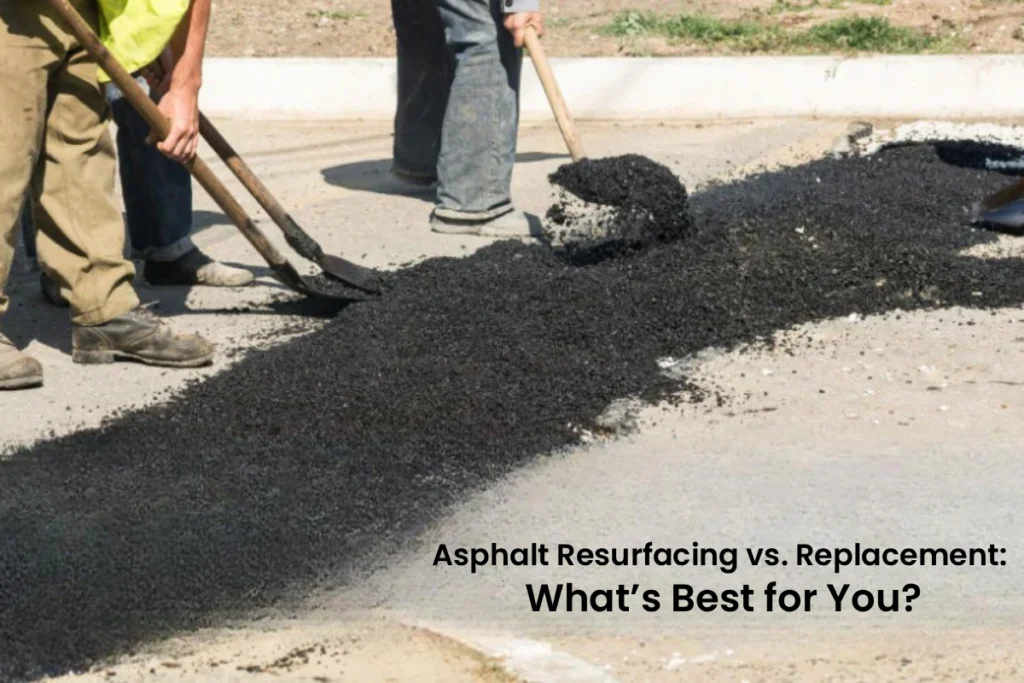
Asphalt Resurfacing vs. Replacement: What’s Best for You?
Not sure whether to resurface your asphalt or tear it out and start fresh? You’re not alone. Many homeowners, property managers, and city officials face this exact decision—and making the wrong call can cost thousands.
Here’s how to choose the right option based on your surface’s condition, age, and usage.
What Is Asphalt Resurfacing?
Resurfacing involves adding a new layer of asphalt—usually 1.5 to 2 inches thick—over the existing surface. It’s like giving your pavement a fresh coat of armor without replacing the foundation.
When to Choose Resurfacing:
- Your pavement is 10–15 years old.
- The base is still structurally sound.
- Cracks are shallow (less than 1/4 inch).
- You’re dealing with surface wear, not deep damage.
Benefits:
- More affordable than full replacement
- Quicker turnaround time
- Can extend lifespan by 8–15 years
What Is Asphalt Replacement?
Replacement is a full reconstruction. The existing surface is removed, the base is evaluated (and often rebuilt), and new asphalt is laid.
When to Choose Replacement:
- The base is compromised or uneven.
- You see widespread potholes or alligator cracking.
- Drainage is poor or has caused erosion.
- The pavement is over 20–25 years old.
Benefits:
- Resets your pavement’s lifespan to 20–30 years
- Allows for design upgrades (thickness, slope, base reinforcement)
- Ensures proper drainage and safety
Cost Comparison (as of 2025):
- Resurfacing: $1.50 – $3.50 per sq ft
- Full Replacement: $4.50 – $8.00 per sq ft
Pro Tip:
Always get a professional inspection before making your decision. A trusted contractor will perform core sampling or ground-penetrating radar to check the health of your base.In Summary:
If the damage is cosmetic or shallow, resurfacing can give you years of smooth driving without the high price. But if the foundation is shot, it’s better to invest in replacement now than pay for constant repairs later.