
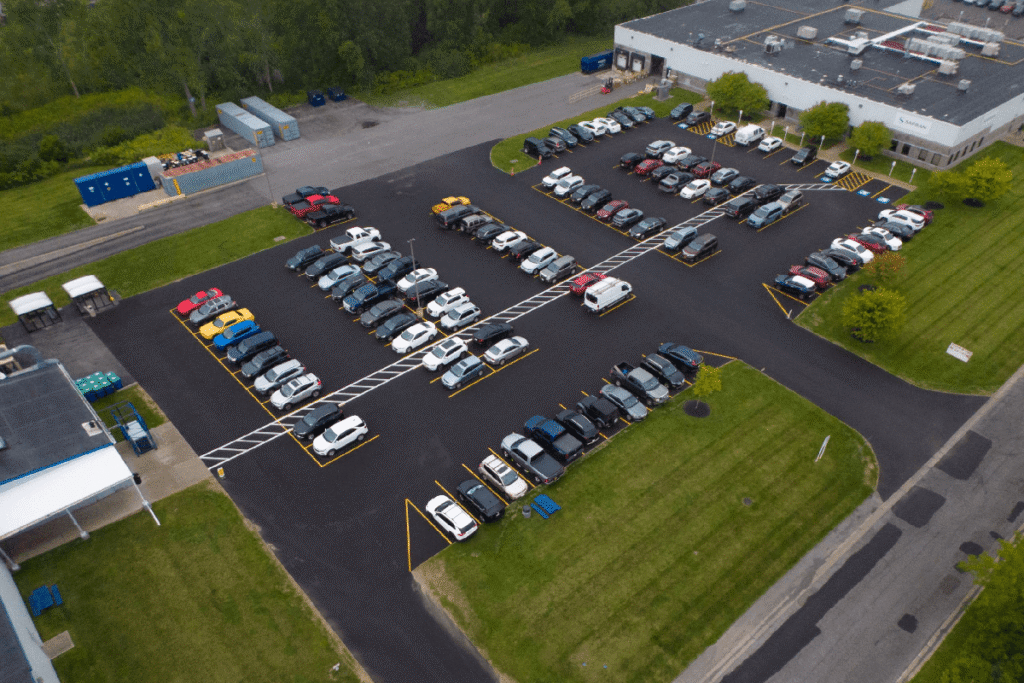
Asphalt Pavement Myths You Should Stop Believing in 2025
Time to Separate Fact from Fiction
Asphalt is everywhere—on roads, driveways, parking lots, and playgrounds. But for something so common, it’s surprising how many myths still exist around how it works, how long it lasts, and how it should be maintained.
If you’re a contractor, property manager, or homeowner trying to make informed decisions in 2025, it’s time to debunk the most common asphalt myths that are costing people time, money, and peace of mind.
Let’s set the record straight.
Myth 1: Asphalt and Blacktop Are the Same Thing
While often used interchangeably, asphalt and blacktop aren’t exactly the same.
- Asphalt is typically used for roads, highways, and industrial applications.
- Blacktop has more stone and a smoother appearance—often used for driveways, basketball courts, or residential lots.
The truth: They’re similar but serve different purposes. Asphalt is stronger and built for heavier loads.
Myth 2: Asphalt Is Bad for the Environment
Wrong! In fact, asphalt is one of the most recycled materials on the planet.
- More than 80 million tons of asphalt are reclaimed every year in the U.S. alone.
- Modern innovations like Warm Mix Asphalt (WMA) and bio-based binders reduce emissions and energy usage during production.
- Asphalt is even being used in carbon-capturing pavements and solar panel roadways.
The truth: Asphalt has come a long way—it’s greener than most people realize.
Myth 3: You Should Seal Your Driveway Every Year
Over-sealing your asphalt surface can actually do more harm than good.
Sealcoating too often can:
- Cause the surface to crack or flake
- Create uneven layers that trap moisture
- Waste money with little added benefit
The truth: You only need to sealcoat your driveway every 3–5 years, depending on wear and climate conditions.
Myth 4: Asphalt Can’t Be Laid in Winter
While cold weather slows things down, it doesn’t make asphalt installation impossible.
Thanks to Warm Mix Asphalt and temperature-controlled equipment, many contractors can now lay pavement in cooler conditions—as long as temperatures are above freezing and the base is dry.
The truth: Asphalt can be installed in late fall or early spring—just hire a crew with the right tools and timing.
Myth 5: Once It Cracks, It’s Too Late
Cracks may look scary, but in most cases, they’re easily repairable.
You can fix:
- Hairline cracks with DIY crack filler
- Surface-level potholes with cold patch or infrared repair
- Edge crumbling with proper grading and base reinforcement
The truth: Cracks are a sign to act—not to replace the whole pavement. Early action saves thousands.
Myth 6: Concrete Is Always More Durable Than Asphalt
Concrete may last longer without frequent maintenance, but that doesn’t mean it’s always the better choice.
- Concrete is rigid and brittle—it tends to crack under sudden stress or freeze-thaw cycles.
- Asphalt is flexible and can handle expansion, contraction, and heavy traffic better.
The truth: In many environments, especially where there’s freeze-thaw or heavy truck traffic, asphalt outperforms concrete in durability and repairability.
Myth 7: Asphalt Is Maintenance-Free
This one is dangerous. Asphalt does require less maintenance than some materials—but it’s far from maintenance-free.
Without regular:
- Crack sealing
- Sealcoating
- Drainage upkeep
- Patching
…the lifespan of asphalt can be cut in half.
The truth: Just like your car, asphalt needs tune-ups to stay strong and smooth.
Myth 8: Asphalt Is Only for Roads
It’s much more versatile than that.
Today, asphalt is used in:
- Playgrounds
- Bike lanes
- Walking trails
- Tennis courts
- Airport runways
- Rooftops in green building designs
The truth: Asphalt is an adaptable, durable surface for way more than just highways.
Final Word: Don’t Let Old Beliefs Cost You
Most asphalt myths come from outdated practices or misunderstood facts. In 2025, the technology, sustainability, and performance of asphalt have evolved dramatically.
Whether you’re planning a project or maintaining one, trust facts—not folklore. Asphalt is smarter, greener, and longer-lasting than ever before.