
The Science Behind Asphalt Load-Bearing Capacity
Asphalt might look like a smooth black surface, but underneath, it’s a carefully engineered structure built to handle weight, weather, and wear. Whether you’re designing a residential driveway or a multi-lane freeway, understanding load-bearing capacity is crucial.
Load-bearing capacity refers to how much pressure a pavement structure can support without deforming or failing. It depends on several factors:
- Thickness of layers – Asphalt pavement isn’t just one layer. It includes the surface course, base course, and subbase, each with specific material and thickness requirements.
- Type of traffic – Light vehicles? Delivery trucks? Aircraft? Each requires different engineering specs.
- Soil strength – A solid foundation starts with good soil. Weak or unstable soils must be stabilized with geotextiles or replaced entirely.
The modulus of elasticity—a measure of a material’s ability to flex under pressure—plays a role too. Asphalt has a high modulus, allowing it to distribute loads across a wide area. But it also flexes just enough to resist cracking.
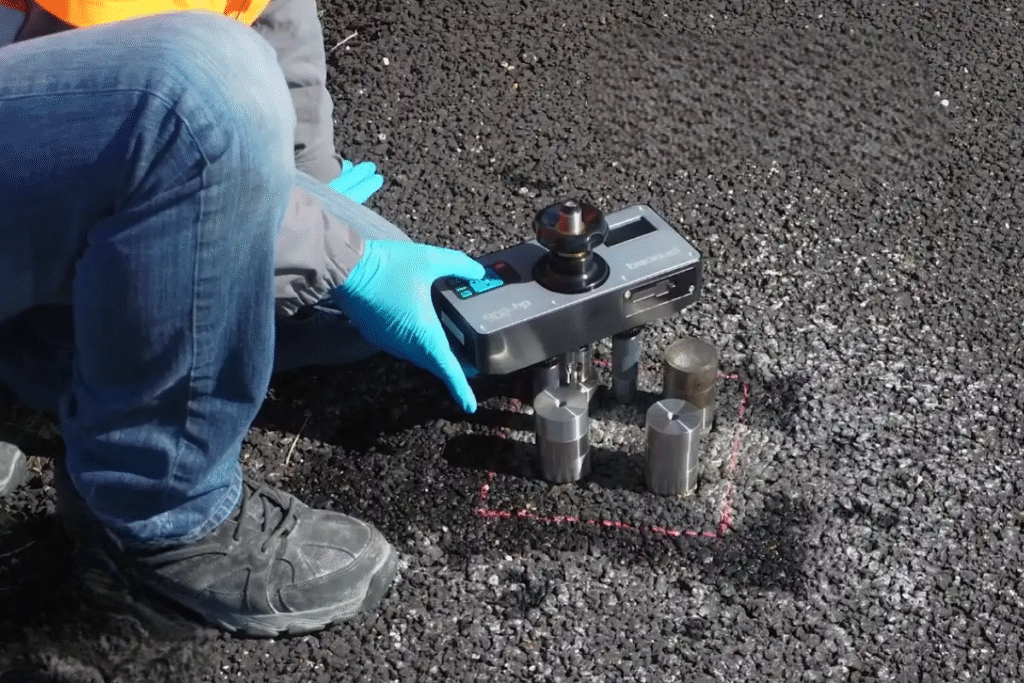
In 2025, engineers use advanced tools like Falling Weight Deflectometers (FWD) and Ground Penetrating Radar (GPR) to assess pavement performance. These tests help determine whether the pavement can handle expected loads—or if it’s time for reinforcement.
Polymer-modified asphalt mixes further boost load-bearing performance. They resist deformation under high traffic loads and extreme temperatures. For airports or industrial zones, these materials provide the strength needed for heavy-duty use.
Regular maintenance preserves load capacity. Cracks, water damage, and oxidation all reduce structural integrity. By keeping pavement sealed and intact, you maintain its ability to carry weight safely.
Understanding the science behind load capacity ensures that every inch of asphalt is working as hard as the vehicles driving over it.