
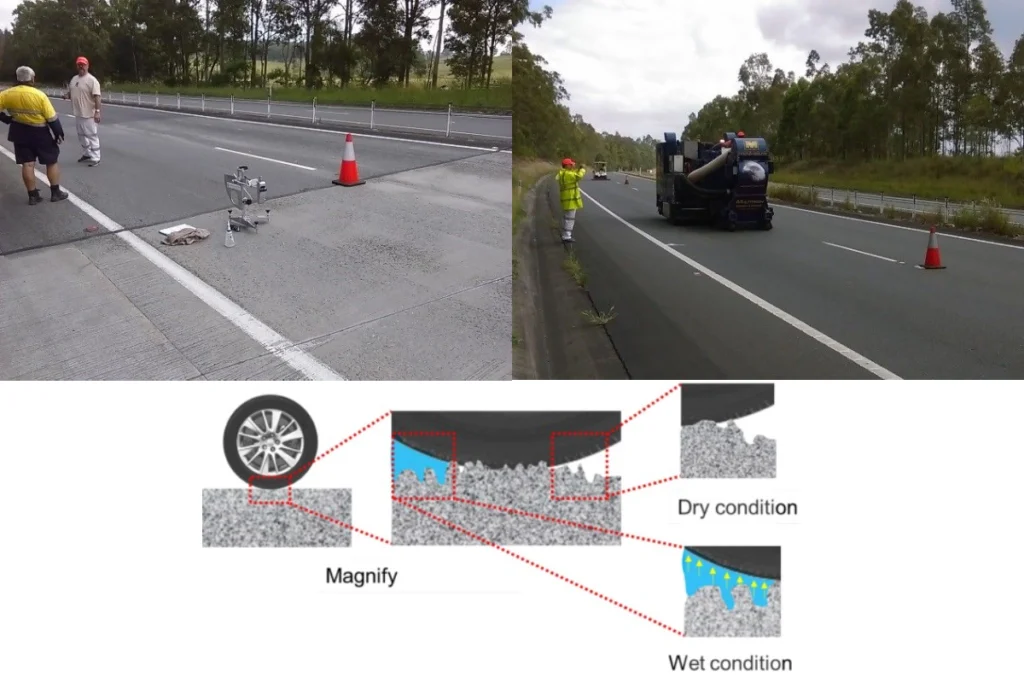
Asphalt Pavement Safety and Skid Resistance
Asphalt pavements are critical to road safety, as their surface characteristics directly influence vehicle control, braking performance, and accident prevention. Skid resistance is a key parameter in ensuring driver safety under wet and dry conditions, making it essential for road engineers, municipalities, and contractors to focus on asphalt pavement safety.
This white paper explores factors affecting skid resistance, measurement techniques, improvement methods, and best practices for safe asphalt pavements.
Understanding Skid Resistance
Skid resistance refers to a pavement surface’s ability to provide friction between tires and the road, preventing skidding and loss of control. Factors influencing skid resistance include:
- Surface Texture
- Macrotexture – Large-scale surface features, such as grooves and aggregate protrusions, allow water drainage and improve wet weather friction.
- Microtexture – Fine-scale texture at the aggregate level affects direct tire-pavement contact and overall grip.
- Material Properties
- Aggregate hardness and angularity impact friction and durability.
- Asphalt binder type influences surface adhesion and flexibility, affecting friction.
- Environmental Conditions
- Rain, snow, ice, and debris reduce friction.
- Pavement temperature and oxidation can alter surface characteristics over time.
- Traffic and Wear
- High traffic volumes lead to polishing of aggregates, reducing skid resistance.
- Heavy vehicles can cause rutting and deformation, creating unsafe driving conditions.
Measuring Skid Resistance
Accurate measurement of skid resistance is essential for evaluating pavement safety. Common methods include:
- British Pendulum Tester (BPT)
- Measures friction at a small scale using a swinging pendulum on the pavement surface.
- Commonly used for spot tests and laboratory evaluation.
- Skid Trailer or Friction Tester
- Vehicle-mounted devices measure skid resistance dynamically at traffic speeds.
- Useful for highway and large network assessment.
- Macrotexture Measurement
- Techniques such as sand patch method or laser profilometers measure surface texture depth.
- Provides insight into water drainage and wet weather friction.
- Continuous Friction Measurement Equipment (CFME)
- High-speed equipment measures skid resistance along long pavement sections.
- Efficient for network-level monitoring and maintenance planning.
Factors Affecting Pavement Safety
- Pavement Material Selection
- Hard, angular aggregates enhance skid resistance.
- Polymer-modified asphalt improves surface durability and friction.
- Surface Design
- Proper macrotexture design ensures effective water drainage.
- Grooving and texturing can reduce hydroplaning risk.
- Maintenance Practices
- Sealcoating and surface treatments maintain texture and prevent aggregate polishing.
- Timely crack sealing and patching prevent water infiltration and surface weakening.
- Traffic Load Management
- Heavy vehicles and high traffic accelerate polishing and rutting.
- Load distribution and traffic control strategies improve long-term safety.
Improving Asphalt Pavement Safety
1. Surface Treatments
- Micro-Surfacing and Slurry Seal – Restore texture, fill minor cracks, and improve friction.
- Chip Seal – Provides a rougher, high-friction surface suitable for low-traffic roads.
2. Grooving and Texturing
- Transverse grooving increases macrotexture and reduces hydroplaning.
- Longitudinal tining can improve skid resistance on high-speed roads.
3. High-Friction Asphalt Mixes
- Incorporate hard, angular aggregates with polymer binders.
- Used in curves, intersections, ramps, and high-risk zones.
4. Routine Maintenance
- Regular inspections to identify polished or worn surfaces.
- Timely corrective actions like overlay, milling, or surface treatments enhance safety.
Case Studies
United States – California
- Highways with wet-weather accidents received high-friction asphalt overlays.
- Result: Accident rates reduced by 35% and skid resistance significantly improved.
Europe – Germany
- Curves and ramps on autobahns were treated with transverse grooving and micro-surfacing.
- Result: Improved wet weather performance and reduced hydroplaning incidents.
Asia – India
- Urban intersections with heavy traffic underwent chip seal and high-friction asphalt application.
- Result: Enhanced pedestrian and vehicular safety, reduced skid-related accidents.
Conclusion
Asphalt pavement safety depends on maintaining adequate skid resistance through careful material selection, surface design, and proactive maintenance. Accurate measurement and monitoring of pavement friction enable engineers and municipalities to identify potential hazards and take corrective action before accidents occur.
Implementing modern techniques such as grooving, high-friction asphalt, and surface treatments ensures that pavements remain safe under wet and dry conditions, supporting efficient traffic flow and protecting lives. Ultimately, proactive attention to asphalt pavement safety is a cost-effective strategy for durable, reliable, and accident-resistant road infrastructure.