
Asphalt Pavement Construction Quality Control
Asphalt pavement construction is a complex process that requires precision, expertise, and consistent monitoring to ensure durable and safe roads. Quality control (QC) during construction is essential to prevent early distress, reduce maintenance costs, and extend pavement life.
This white paper explores asphalt pavement construction quality control practices, techniques, and benefits, guiding engineers, contractors, and municipalities in achieving high-performance pavements.
Importance of Quality Control in Asphalt Construction
Quality control ensures that materials, equipment, and workmanship meet the project specifications. Key reasons QC is critical include:
- Durable Pavements – Proper QC prevents premature cracking, rutting, and raveling.
- Cost Efficiency – Reduces the need for early maintenance or rehabilitation.
- Safety – Ensures smooth, skid-resistant surfaces for drivers.
- Compliance – Meets industry standards, contractual obligations, and regulatory requirements.
- Sustainability – Optimizes material use and minimizes waste.
Key Components of Asphalt Construction Quality Control
1. Material Quality Control
- Asphalt Binder – Ensure correct grade, viscosity, and temperature for the project.
- Aggregates – Verify gradation, cleanliness, and durability.
- Mix Design – Confirm that the asphalt mix meets specifications for strength, flexibility, and performance.
- Moisture Control – Prevent water contamination in aggregates or binder, which can compromise pavement quality.
2. Equipment Calibration and Maintenance
- Ensure pavers, rollers, and milling machines are properly calibrated.
- Maintain equipment to guarantee uniform compaction and smooth surface finish.
- Temperature control devices must be accurate to avoid hot or cold spots in asphalt.
3. Temperature Control
- Asphalt must be laid at optimal temperatures to ensure proper compaction and bonding.
- Hot spots or cool spots can lead to segregation, raveling, or weak layers.
- Use infrared thermometers and thermal imaging for real-time monitoring.
4. Compaction Quality
- Proper compaction reduces air voids, increases density, and improves load-bearing capacity.
- Use rollers with correct weight and type for each pavement layer.
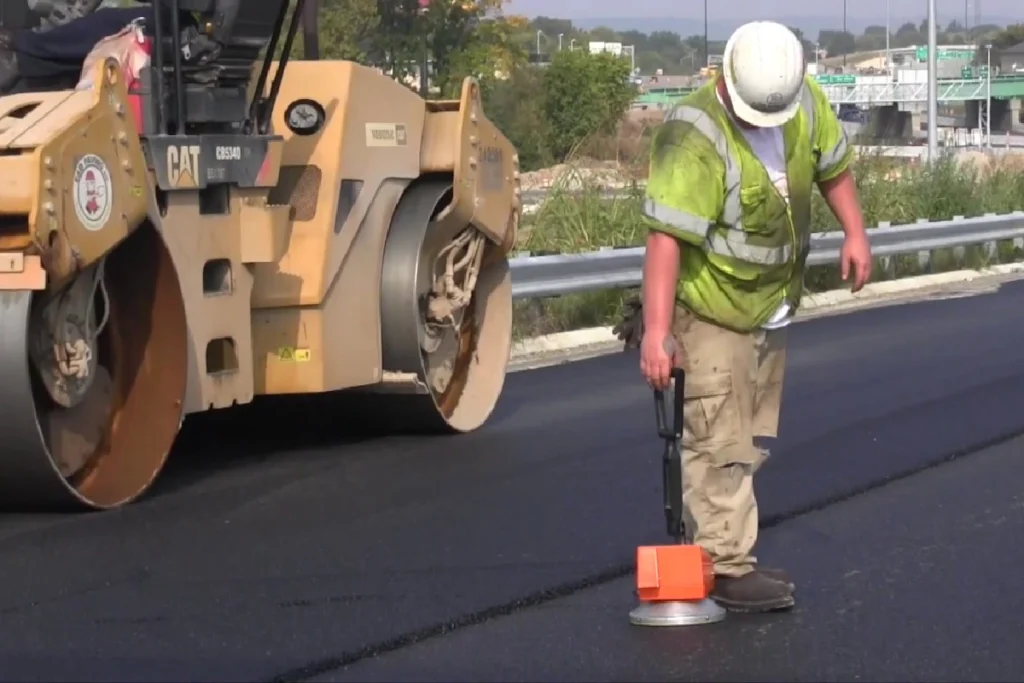
- Monitor compaction with nuclear density gauges or core samples.
5. Layer Thickness and Uniformity
- Verify layer thickness using field measurements and ensure compliance with design specifications.
- Uniform thickness prevents rutting, cracking, and uneven settlement.
- Milling and overlay thickness must match engineering design requirements.
6. Surface Smoothness
- Smooth pavements improve ride quality, safety, and durability.
- Use profilometers or straightedge measurements to assess surface evenness.
- Correct minor deviations immediately to prevent long-term distress.
Quality Control During Construction
1. Pre-Construction QC
- Review project specifications, mix designs, and construction plans.
- Inspect aggregates, binders, and equipment before work begins.
- Conduct trial mixes and test sections to validate quality parameters.
2. During Construction QC
- Monitor asphalt temperatures, laydown rates, and compaction.
- Perform continuous sampling and testing of asphalt and aggregate materials.
- Conduct visual inspections for segregation, cracking, or raveling.
3. Post-Construction QC
- Core sampling to check density, layer thickness, and mix uniformity.
- Evaluate surface smoothness and skid resistance.
- Document findings for future maintenance and quality verification.
Modern Quality Control Technologies
- Automated Density Gauges – Ensure uniform compaction across the pavement surface.
- Infrared Thermal Imaging – Detect temperature variations, cold spots, and inconsistencies.
- Ground Penetrating Radar (GPR) – Inspect layer thickness and detect sub-surface voids.
- Real-Time Data Systems – Monitor paver performance, roller speed, and material temperature digitally.
- Laser Profilometers – Measure surface smoothness for ride quality assessment.
Benefits of Effective Construction QC
- Enhanced Pavement Durability – Reduces premature cracking, rutting, and potholes.
- Cost Savings – Minimizes repair costs and extends pavement service life.
- Improved Safety – Smooth, skid-resistant surfaces reduce accidents.
- Regulatory Compliance – Meets local, national, and international standards.
- Sustainability – Optimizes material usage, reduces waste, and supports recycled asphalt integration.
Case Studies
United States – Texas
- QC during highway construction included automated compaction monitoring and thermal imaging.
- Result: High-density, uniform pavements with minimal early distress, reducing maintenance costs by 30%.
Europe – Germany
- Used GPR and laser profilometers for post-construction verification of urban roads.
- Result: Accurate layer thickness, improved smoothness, and extended pavement lifespan.
Asia – India
- QC practices for expressway construction included material testing, core sampling, and ride quality assessments.
- Result: Durable roads with fewer complaints from drivers and lower lifecycle maintenance costs.
Conclusion
Quality control during asphalt pavement construction is essential for long-lasting, safe, and high-performance roads. By implementing robust QC procedures, monitoring critical parameters, and leveraging modern technologies, engineers and contractors can prevent early distress, optimize resources, and enhance overall pavement performance.
Effective QC ensures that asphalt pavements meet design specifications, withstand traffic loads, and remain safe and durable for decades. As urbanization and traffic volumes increase, rigorous construction quality control will be increasingly important for sustainable and resilient infrastructure.