
The Lifecycle of Asphalt Roadways: From Design to Rehabilitation
Introduction
Asphalt roadways are the backbone of modern transportation. They connect cities, enable trade, and keep everyday life moving smoothly. But roads are not permanent. Every asphalt pavement has a lifecycle — from the first design sketches to the day it needs rehabilitation or reconstruction. Understanding this lifecycle helps engineers, contractors, and city planners make better decisions that save money, improve safety, and ensure roads last as long as possible.
In this white paper, we’ll explore the complete lifecycle of asphalt roadways, explain the role of each phase, and share best practices to maximize the service life of pavements.
Phase 1: Planning and Design
The lifecycle of any roadway starts well before the first truck of asphalt arrives. The planning and design phase determines how long the road will last and how well it will perform.
Key considerations during design:
- Traffic Volume: Will the road carry light passenger cars or heavy trucks daily?
- Soil Conditions: Weak soil requires a thicker base or stabilization techniques.
- Climate: Asphalt behaves differently in hot, cold, or wet environments.
- Drainage: Poor water management is the fastest way to damage asphalt.
Engineers use this data to choose the right asphalt mix, base thickness, and drainage design. A well-designed road can last decades with proper maintenance.
Phase 2: Construction
Once design is complete, the next phase is construction. Proper execution here is critical — even the best design fails if construction is poor.
Steps in asphalt road construction include:
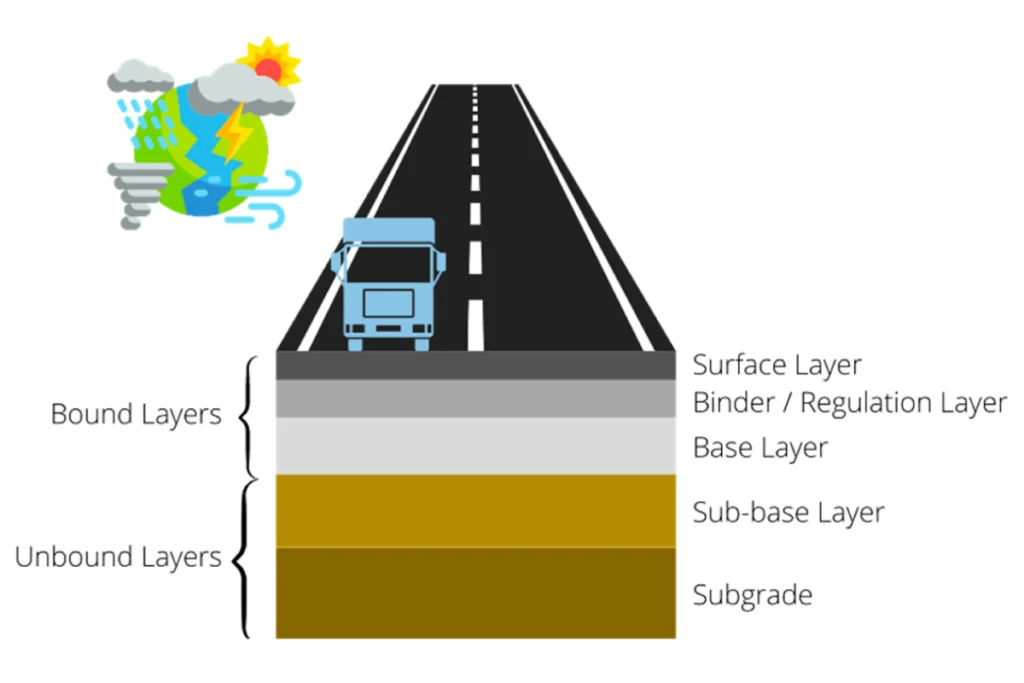
- Site Preparation: Clearing, grading, and compacting the soil.
- Base Layer Installation: Adding crushed stone or gravel for stability.
- Binder Layer: A strong asphalt layer that provides load-bearing strength.
- Surface Layer (Wearing Course): Smooth asphalt mix designed for traffic and weather exposure.
Quality control during construction is essential. If compaction is not done correctly, air voids can weaken the pavement, leading to cracks and potholes much earlier than expected.
Phase 3: Early Life and Preventive Maintenance
Once the road is in service, the early years are the best time to protect it. Asphalt is flexible, but over time it reacts to temperature changes, traffic loads, and weather.
Preventive maintenance measures include:
- Sealcoating: Protects the surface from water and UV rays.
- Crack Sealing: Stops water from entering cracks that form naturally.
- Routine Cleaning: Removes debris and vegetation that can damage pavement.
Preventive care is far cheaper than major repairs later. For every dollar spent early, agencies can save 4–10 dollars in future repairs.
Phase 4: Mid-Life Maintenance and Repairs
As traffic and time take their toll, asphalt pavements start showing distress: cracks, raveling, or small potholes. These issues need more than preventive work.
Typical mid-life maintenance includes:
- Overlaying: Adding a new asphalt layer to restore smoothness.
- Milling and Resurfacing: Removing the top layer before placing new asphalt.
- Patching: Fixing potholes or localized failures.
This stage can extend the road’s life by 10–15 years if done properly.
Phase 5: Late-Life Rehabilitation
Eventually, every road reaches the end of its useful life. Maintenance alone won’t fix deep structural damage. At this stage, rehabilitation or reconstruction is required.
Options include:
- Full-Depth Reclamation: Pulverizing existing pavement and reusing it as base.
- Reconstruction: Removing and rebuilding the entire roadway.
- Recycling Asphalt (RAP): Using reclaimed asphalt pavement to lower costs and increase sustainability.
Rehabilitation is costly, but it provides a fresh start for the lifecycle.
Factors That Shorten Roadway Lifecycles
Not all asphalt roads reach their full design life. Some common issues include:
- Poor drainage systems leading to water damage.
- Low-quality construction practices.
- Overloading beyond design limits (e.g., heavy trucks).
- Lack of consistent maintenance.
Maximizing Roadway Lifespan
Agencies and contractors can stretch the lifecycle of asphalt roads by:
- Investing in proper design tailored to traffic and climate.
- Ensuring quality control during construction.
- Applying preventive maintenance early and consistently.
- Monitoring roads with modern technologies like sensors and drones.
Conclusion
The lifecycle of asphalt roadways is a predictable journey: design → construction → preventive maintenance → mid-life repairs → rehabilitation. Each stage matters, and neglect at any point shortens the road’s useful life. By understanding and managing the lifecycle, governments, engineers, and contractors can build safer, longer-lasting, and more cost-effective roads.