
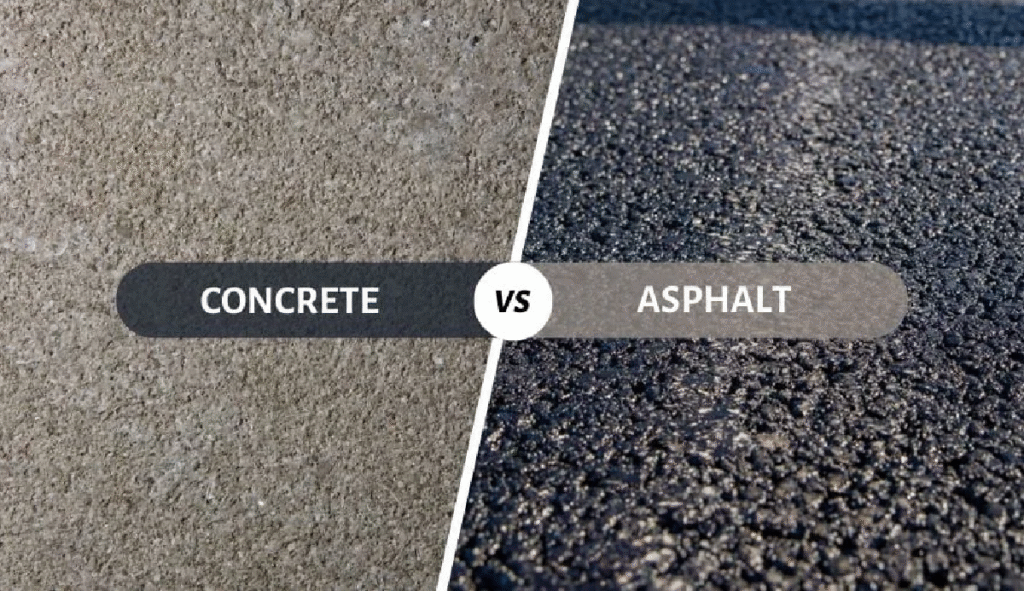
Asphalt vs. Concrete: Which Pavement Type Is Right for Your Project?
The Ongoing Debate in Road Construction
If you’re planning a paving project—whether it’s a commercial parking lot, residential driveway, or a multi-lane highway—you’re likely asking the age-old question: asphalt or concrete? Both materials have loyal advocates, and for good reason. They’re durable, versatile, and widely used. But the choice between them isn’t always straightforward.
In 2025, with construction costs rising and environmental pressures increasing, understanding the differences between asphalt and concrete is more important than ever. This blog breaks down the pros, cons, and ideal use cases for each to help you make a well-informed decision.
Understanding the Materials
Asphalt: The Flexible Contender
Asphalt is a petroleum-based material composed of aggregates and bitumen. It’s known for its smooth finish, flexibility, and quick installation. Asphalt is most commonly used for roads, highways, airport runways, and driveways due to its cost efficiency and performance in colder climates.
Concrete: The Rigid Powerhouse
Concrete is made from a mixture of cement, water, sand, and gravel. It’s highly durable, structurally rigid, and ideal for heavy-load applications like industrial zones and high-traffic intersections. Its lighter color also reflects sunlight, reducing surface temperatures.
Comparing Asphalt and Concrete by Key Factors
1. Cost and Installation Time
- Asphalt is typically more affordable upfront and can be installed faster. This makes it ideal for projects with tight timelines and budgets.
- Concrete is more expensive due to material and labor costs. Installation takes longer because it requires curing before use.
🡪 Verdict: If speed and cost are priorities, asphalt usually wins.
2. Maintenance and Repairs
- Asphalt requires regular maintenance such as sealcoating and crack filling, but repairs are often simple and inexpensive.
- Concrete is more resistant to surface wear but, when cracks or damage occur, repairs are more complex and costly.
🡪 Verdict: Asphalt is easier and cheaper to maintain, while concrete is more stable long-term with less frequent upkeep.
3. Durability and Lifespan
- Concrete tends to last longer—30 to 50 years with minimal maintenance—especially in hot climates.
- Asphalt, with regular care, lasts 15 to 30 years and performs better in colder climates because it flexes under freezing and thawing conditions.
🡪 Verdict: Concrete edges out in hot, static environments. Asphalt handles cold and shifting conditions better.
4. Environmental Impact
- Asphalt is 100% recyclable and requires less energy to produce with innovations like Warm Mix Asphalt (WMA).
- Concrete production emits more CO₂ due to cement processing but reflects more sunlight (lower urban heat island effect).
🡪 Verdict: Both materials are improving their eco-footprint, but asphalt currently leads in recyclability and innovation.
5. Aesthetic and Functional Versatility
- Concrete can be colored, stamped, or textured, offering more design flexibility for public spaces or upscale developments.
- Asphalt typically comes in one color—black—but offers a cleaner look for roads and industrial applications.
🡪 Verdict: Concrete wins for decorative projects. Asphalt wins for uniformity and simplicity.
Real-World Applications: Where Each Shines
Use Asphalt For:
- Highways and freeways (where fast repairs are essential)
- Airport runways (asphalt reduces hydroplaning risk)
- Driveways in cold climates (better freeze-thaw resistance)
- Municipal roads with high maintenance needs
Use Concrete For:
- Heavily trafficked intersections and bus lanes
- Industrial yards with static heavy loads
- Urban areas seeking decorative finishes
- Hot weather regions with minimal temperature change
What’s New in 2025?
The gap between asphalt and concrete is narrowing thanks to advancements in both materials.
- Concrete technologies now include rapid-setting formulas and lower-carbon mixes using alternative binders like fly ash and slag.
- Asphalt has seen major strides with Warm Mix Asphalt, polymer-modified bitumen, and rejuvenators that extend life while reducing emissions.
Additionally, smart infrastructure is now being built into both materials. Sensors embedded in pavement can monitor temperature, strain, and traffic flow—helping cities manage roads more efficiently.
Choosing What’s Right for Your Project
Ultimately, your decision should align with the project’s specific needs, such as:
- Climate: Colder? Asphalt. Hot and dry? Concrete.
- Budget and schedule: Asphalt is faster and more affordable.
- Traffic load: Concrete for heavy loads; asphalt for standard use.
- Aesthetics and branding: Concrete offers more customization.
Consulting with civil engineers and material specialists is always recommended for long-term projects or areas with complex environmental demands.
Final Word: It’s Not About Which Is Better—It’s About What Works Best
In the asphalt vs. concrete debate, there’s no universal winner. Each material brings unique strengths to the table. In 2025, the best solution is the one that balances functionality, cost, sustainability, and long-term value for your specific environment.
With modern materials improving across the board, either choice can serve you well—if you pick it for the right reason.